
Why Does My MacBook Air M4 Heat Up So Quickly?
The M4 Air runs hotter than you might expect because it has no fan, understanding why helps you know when to act.
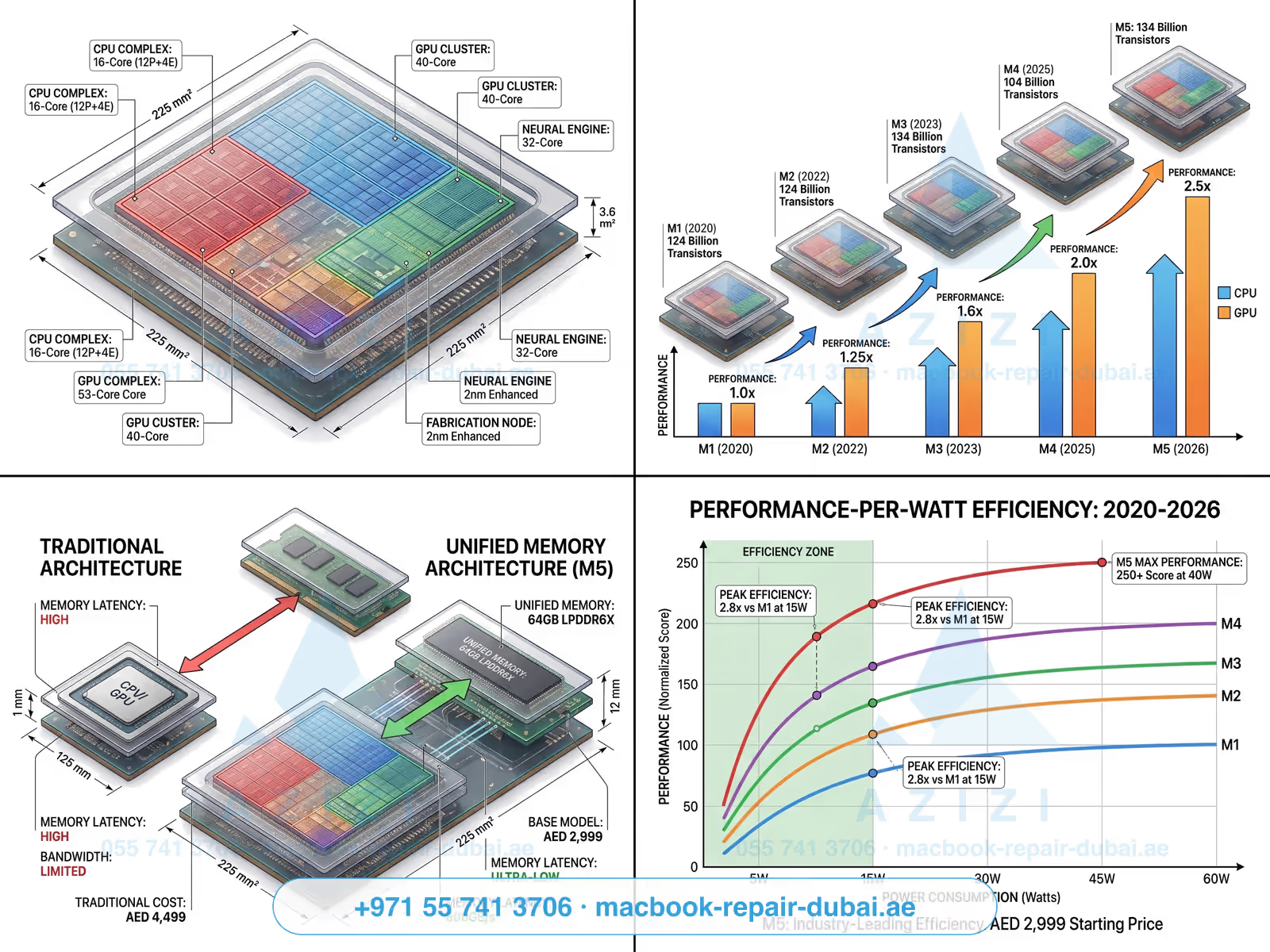
The M4 Air has no fan, that's the whole story
Apple chose a fanless design for the MacBook Air to keep it thin, silent, and light. There is no fan, no heat pipe, and no active airflow inside the chassis. Heat is dissipated passively through the aluminium body and the internal structure.
This works brilliantly for everyday tasks, web browsing, email, documents, video calls. The M4 chip is efficient enough that most of the time the machine stays comfortably warm at most. But when you push the chip hard, exporting a video, running a heavy compile, playing a GPU-intensive game, heat builds faster than it can escape, and the chip deliberately slows itself down to stay within safe temperature limits. This is called thermal throttling, and it is a feature, not a fault.
What temperature is normal?
You can check the chip temperature using a free tool like iStatMenus or the built-in sudo powermetrics command in Terminal. Normal ranges on the M4 Air:
- Idle / light use: 35–45 °C, barely warm to the touch.
- Moderate load (video call, large spreadsheet): 55–70 °C, warm but not hot.
- Heavy sustained load (video export, gaming): 80–95 °C, hot on the underside. Normal. Throttling may kick in.
- Above 100 °C: The chip protects itself by throttling hard. Performance drops noticeably. Usually caused by a runaway process.
Common causes of faster-than-expected heat buildup
- Runaway background process: a browser tab, a stuck iCloud sync, or Spotlight indexing after an OS update can max out one CPU core indefinitely.
- Soft surface blocking airflow: using the Air on a blanket or pillow significantly reduces passive cooling. The base needs clear air around it.
- Hot ambient environment: Dubai summers push ambient temps above 35 °C. A machine that runs fine in an air-conditioned room may throttle on a sun-warmed desk near a window.
- Outdated macOS: Apple regularly ships efficiency patches. A stale OS can leave power-hungry bugs live on the M4.
- Multiple external displays: driving two monitors via a USB-C hub pushes the GPU hard and is a known heat trigger on the M4 Air.
When to be concerned
The M4 Air running hot during a video export is normal. These signs are not normal and warrant a check:
- The machine is extremely hot at idle with no visible processes running.
- Performance drops to a crawl even on simple tasks like typing.
- You see sudden shutdowns, the chip's thermal protection tripped.
- The underside has developed a hot spot in one area, which can indicate a failing internal component.
If any of those apply, a MacBook overheating diagnostic will tell you whether it's a software issue, a thermal paste degradation (less likely on a new M4, more relevant on older Intel models), or a component fault.
The fan-vs-fanless trade-off in plain terms
The MacBook Air M14 and the MacBook Pro 14 use the same M4 chip. The Pro sustains peak performance longer because its fan keeps the chip cool. The Air throttles sooner but is thinner, lighter, and completely silent. Apple designed it this way on purpose. If you regularly do sustained heavy workloads, video editing, 3D rendering, software compilation, the MacBook Pro is the right tool. If your work is mostly lighter tasks with occasional bursts, the Air handles it fine.
Frequently asked questions
- Not in normal use. The M4 chip manages its own temperature by throttling performance before any hardware damage can occur. Heat during video exports or gaming is expected and safe. Sustained shutdown-level overheating at idle is the only situation that needs investigation.
- Your old Intel Mac likely had a fan that kicked in to keep temperatures lower. The M4 Air has no fan, so heat is more noticeable to the touch even though chip temperatures are well within safe limits. The M4 also delivers far more performance per watt, so brief bursts of high performance generate more heat per second than older, slower chips.
- External USB cooling pads don't help much because the MacBook Air doesn't vent heat through its base the way Windows laptops do. The most effective external cooling measure is using a stand that lifts the machine so the full chassis is exposed to air. Low Power Mode in System Settings is the most reliable way to reduce heat if throttling bothers you.
- Open Activity Monitor (Spotlight → Activity Monitor) and check the CPU tab sorted by % CPU. Something is running in the background, a browser, iCloud sync, Spotlight indexing, or a stuck process. If you can't find the culprit and it happens after every restart, bring it in for a free diagnostic.
Related on MacBook Repair Dubai
About the author
Usman is a senior macbook technician at MacBook Repair Dubai, Dubai's longest-running Apple-only repair workshop (since 2004). Personally signs the QC checklist on every job leaving the bench.