
Mac mini Overheating or Loud Fan in Dubai? Causes and Fixes
A Mac mini running hot with a loud fan in Dubai is usually a dust-clogged vent or dried thermal paste, and a thermal service at our Media City workshop starts with a free diagnosis — message us on WhatsApp for a quote on your model.
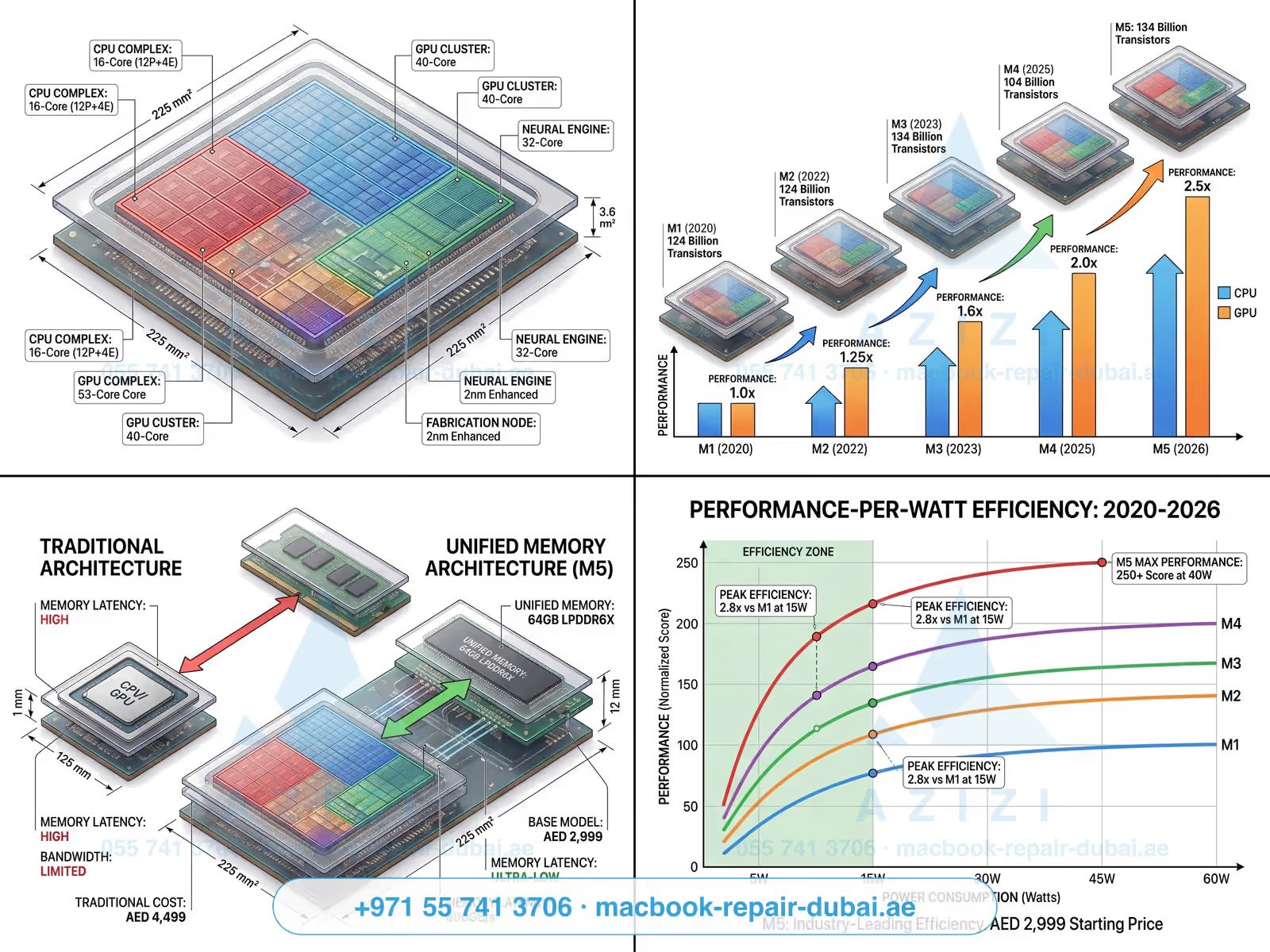
Why does my Mac mini overheat or run a loud fan?
The Mac mini pulls cool air in through the perforated ring on the underside and pushes hot air out of the slot at the rear, with a single blower fan doing all the work. When that airflow path is restricted, the internal temperature climbs, the fan spins faster to compensate, and you hear it. A loud fan is a symptom, not the fault: the fan is doing exactly what it should, the heat just has nowhere to go.
On a Mac mini specifically, the usual reasons it overheats are these:
- Dust in the intake ring: the underside vent clogs with dust and lint, starving the fan of airflow. This is the single most common cause in Dubai homes and offices.
- Dried thermal paste: on Intel Mac mini models the paste between the CPU and heatsink hardens over years, so heat no longer transfers efficiently.
- A failing or seized fan bearing: the blower spins slower or rattles, so it moves less air even at full speed.
- Sustained heavy workload: Final Cut exports, Xcode builds, Docker containers or a 24/7 media server keep the chip at full power for hours.
- Blocked exhaust: the mini pushed against a wall or stacked under a monitor stand traps hot air right at the rear slot.
Apple Silicon minis (M1, M2, M4) run far cooler than the old Intel units and barely spin the fan in normal use, but they still throttle and get loud if the vent is choked or the room is hot. So the first job is always to separate a software cause from a physical airflow cause.
Step 1: First checks you can do at home
Before assuming hardware, rule out a runaway process. Open Activity Monitor (Spotlight, then type "Activity Monitor"), click the CPU tab and sort by % CPU. A Mac mini sitting idle should show low single-digit CPU use. If something is pinned near 100% you have found the heat source.
- Check for runaway apps: Chrome tabs, Docker, Handbrake, mdworker, or a stuck browser process can hold the chip at full power and keep the fan loud.
- Look at mds and mds_stores: Spotlight re-indexing after a macOS update is normal for a day or two and then settles. If it never settles, it points to a corrupt index.
- Give the mini room to breathe: pull it 10 cm clear of the wall, take it off any stack, and never sit it on a soft surface that blocks the underside ring.
- Restart the Mac mini: a clean reboot clears stuck processes and a stuck fan controller, and gives you a true idle baseline.
If the fan quietens down and temperatures drop once you quit the offending app or reboot, the cause was software and you are done. If the mini is still hot and loud while doing nothing, the cause is physical and you move to Step 2.
Step 2: Narrow down the cause
With software ruled out, work through the physical causes in order of likelihood. The goal here is to tell a simple dust problem apart from a thermal-paste or fan problem, because each one needs a different fix and a different price.
- Inspect the underside ring: shine a light into the perforated intake ring. Visible grey fuzz or a felted layer of dust means restricted airflow, the most common and cheapest fault.
- Listen to the fan: a smooth rising whoosh under load is a healthy fan. A clicking, grinding or rattling tone, or a fan that stays loud even when cold, points to a worn bearing.
- Note the timeline: a mini that has slowly got louder over two or three years is usually dust plus dried paste. A mini that went loud suddenly is more likely a fan or a stuck process.
- Check the age and chip: any Intel Mac mini four or more years old is a strong candidate for dried thermal paste regardless of dust.
A quick way to gauge how hot it really is: install a free temperature reader such as a menu-bar sensor app and watch the package temperature. An Intel Mac mini happily idles in the 40s and pushes into the 90s under load. If yours sits in the 80s or 90s while idle, airflow or paste is the problem, not the workload.
Step 3: How to confirm the fault
Confirming the fault means matching the temperature behaviour to the symptom so you are not paying for the wrong repair. Run the mini idle for ten minutes, then put it under a steady load (export a video, run a benchmark) for ten minutes, and watch the sensor.
- Idle stays high, fan loud: temperatures in the 80s with no workload almost always means a clogged vent. Confirm by looking for dust at the intake ring.
- Idle fine, load spikes fast then throttles: a quick jump to 95°C plus the moment load starts, with performance dropping, is the signature of dried thermal paste on an Intel mini.
- Fan loud but temperatures still climb: if the fan is at maximum and the mini is still cooking, the fan is moving too little air, which means a worn bearing or a fan that needs replacing.
- Random shutdowns when hot: a Mac mini that powers off under load is hitting its thermal safety cut-off, a sign the cooling has failed and it needs service before damage occurs.
We do this same confirmation on the bench for free. We log idle and load temperatures before opening the unit, so we can show you exactly which fault is present and prove the improvement after the service with a side-by-side reading.
Step 4: What needs a technician
Some of this is safe to handle yourself, and some is not. A light blow-out of the intake ring with a can of compressed air, from the outside only, is fine and can buy you time. Anything that involves opening the mini is bench work, because the chassis is tightly packed and the fan, antenna plate and logic board are easy to damage.
- Internal dust clean and fan service: removing the base, lifting the antenna plate and the fan, and clearing dust from the heatsink fins that you cannot reach from outside.
- Thermal paste replacement: lifting the heatsink off the CPU, cleaning off the hardened paste and applying fresh high-grade compound. This is the fix for an overheating Intel mini.
- Fan replacement: fitting a new blower when the bearing is worn, rattling, or the fan no longer moves enough air at full speed.
- Full thermal service: dust clean, fresh paste and fan check together, the complete job for an older mini that has never been opened.
If your mini is still under warranty, do not open it: leave it sealed and let us advise you. If it is out of warranty, an internal clean and a thermal service typically restore it to near-new running temperatures and quiet operation, and we test it under load before it leaves the bench.
Does Dubai heat make this worse?
Yes, and noticeably so. A cooling system can only ever drop the chip a fixed number of degrees below the air it pulls in. When Dubai ambient heat climbs above 35°C, often well above it in a room without good air conditioning, the mini starts every job hotter and has far less headroom before it throttles or runs the fan flat out. A mini that was quiet in winter can become loud through a Dubai summer with no actual fault at all.
Dust makes this worse in two ways here. Fine construction and desert dust is common in Dubai offices and apartments, and it clogs the intake ring faster than in milder climates. On top of that, many people place the mini behind a monitor or inside a closed desk cubby, where the rear exhaust just recirculates its own hot air.
- Keep it in the cooled part of the room: out of direct sun from floor-to-ceiling windows and away from other heat-producing kit.
- Leave clear space: at least 10 cm behind the rear vent and nothing covering the underside intake ring.
- Clean it more often: an annual internal clean is sensible in Dubai, versus every two or three years in cooler climates.
- Do not run it in an unconditioned room: a mini left as a 24/7 server in a hot store room will throttle constantly and age faster.
What is different between Intel and Apple Silicon repairs?
The cause and the fix change a lot depending on whether your Mac mini is Intel or Apple Silicon. Knowing which you have tells you what to expect before you bring it in.
| Mac mini generation | Typical heat cause | Usual fix |
|---|---|---|
| Intel (2014, 2018) | Dried thermal paste plus dust, the chip runs hot by design and degrades over years | Full thermal service: clean plus fresh paste, often plus fan |
| M1 (2020) | Rarely a hardware fault, usually a blocked vent or a runaway process | Vent clean and software check, paste rarely needed |
| M2 / M2 Pro (2023) | Vent dust or sustained pro workloads in a hot room | Internal dust clean, improve placement and airflow |
| M4 / M4 Pro (2024) | Compact redesign, mostly placement and dust rather than paste | Vent clean, keep underside intake clear |
The short version: an overheating Intel mini almost always needs thermal paste and a proper internal clean, because the part itself has worn. An overheating Apple Silicon mini is usually airflow or software, so the fix is cheaper and quicker. If you are not sure which you have, the chip and year show under Apple menu, then About This Mac.
Mac mini overheating repair cost in Dubai
The work that fixes an overheating or loud Mac mini ranges from a quick dust clean up to a full thermal service or, rarely, board-level repair. We diagnose for free and confirm the exact fault with before-and-after temperature readings, so you only pay for what the mini actually needs. Message us on WhatsApp with your Mac mini model for today's exact price.
| Service | Our price | Apple / third-party |
|---|---|---|
| Dust clean + fan service | Price on request | Price on request |
| Thermal paste replacement (Intel) | Price on request | Price on request |
| Fan replacement | Price on request | Price on request |
| Full thermal service | Price on request | Price on request |
| Logic board repair (severe) | Price on request | Price on request |
A simple dust clean and fan service is usually same-day. A full thermal service, which is the right call for any older Intel mini that has never been opened, combines the clean, fresh paste and a fan check. See the full Mac mini repair service →
When is it a deeper board fault?
In a small number of cases, an overheating Mac mini is not about airflow at all. If the cooling is clean and freshly serviced and the mini still cooks or shuts down, the heat is coming from the logic board itself, and that needs board-level diagnosis.
- Hot with the fan barely spinning: a chip that runs hot while the fan stays slow suggests a faulty fan controller or sensor on the board, not a dust problem.
- One area always burning hot: a single component running far hotter than the rest points to a failing power-management chip or a short on a power rail.
- Shutdowns even after a thermal service: if a clean and fresh paste did not stop the thermal cut-offs, the fault is electrical, not mechanical.
- Heat plus other symptoms: overheating combined with no display, random reboots or refusing to power on points back to the board.
These are repairable, but they call for micro-soldering and a proper diagnosis rather than a clean. We test the board, isolate the faulty stage and quote before any work starts. Mac repair Dubai →
Frequently asked questions
- Almost always restricted airflow. Dust clogs the underside intake ring, on Intel minis the thermal paste dries out and stops transferring heat, or the blower fan bearing wears. The fan gets loud because it is working harder to cool a unit that cannot shed heat. A heavy 24/7 workload can also keep an otherwise healthy mini hot.
- Sustained Dubai ambient heat above 35°C does not instantly damage a mini, but it removes cooling headroom so it throttles and runs the fan flat out far sooner. Long-term it ages the unit faster. Keep the mini in the air-conditioned part of the room, out of direct sun, with the rear vent and underside intake clear.
- A full thermal service, clean plus fresh paste, typically keeps a Mac mini running cool for two to three years before paste begins to dry again. In Dubai, where dust builds up faster, an annual quick internal clean keeps temperatures low between full services and extends the life of the work.
- If the cause is dust, dried paste or a worn fan, then yes, a thermal service restores near-new running temperatures and quiet operation, and we prove it with before-and-after readings. If the mini still overheats after a clean and fresh paste, the heat is coming from the logic board and needs board-level diagnosis instead.
- A dust clean and fan service is usually same-day, often within a couple of hours. A full thermal service with fresh paste is also typically same-day if you drop off before 11am. A fan replacement depends on part availability but is usually same or next day. Board-level work takes longer and is quoted after diagnosis.
- Light use is generally safe because the mini will throttle and, if it gets too hot, shut down to protect itself. But running it hot for long periods stresses components and shortens their life, and repeated thermal shutdowns can lead to instability. If it is shutting down or scorching hot, stop heavy use and have it serviced soon.
Related on MacBook Repair Dubai
About the author
Memona is a senior apple device technician at MacBook Repair Dubai, Dubai's longest-running Apple-only repair workshop (since 2004). Personally signs the QC checklist on every job leaving the bench.